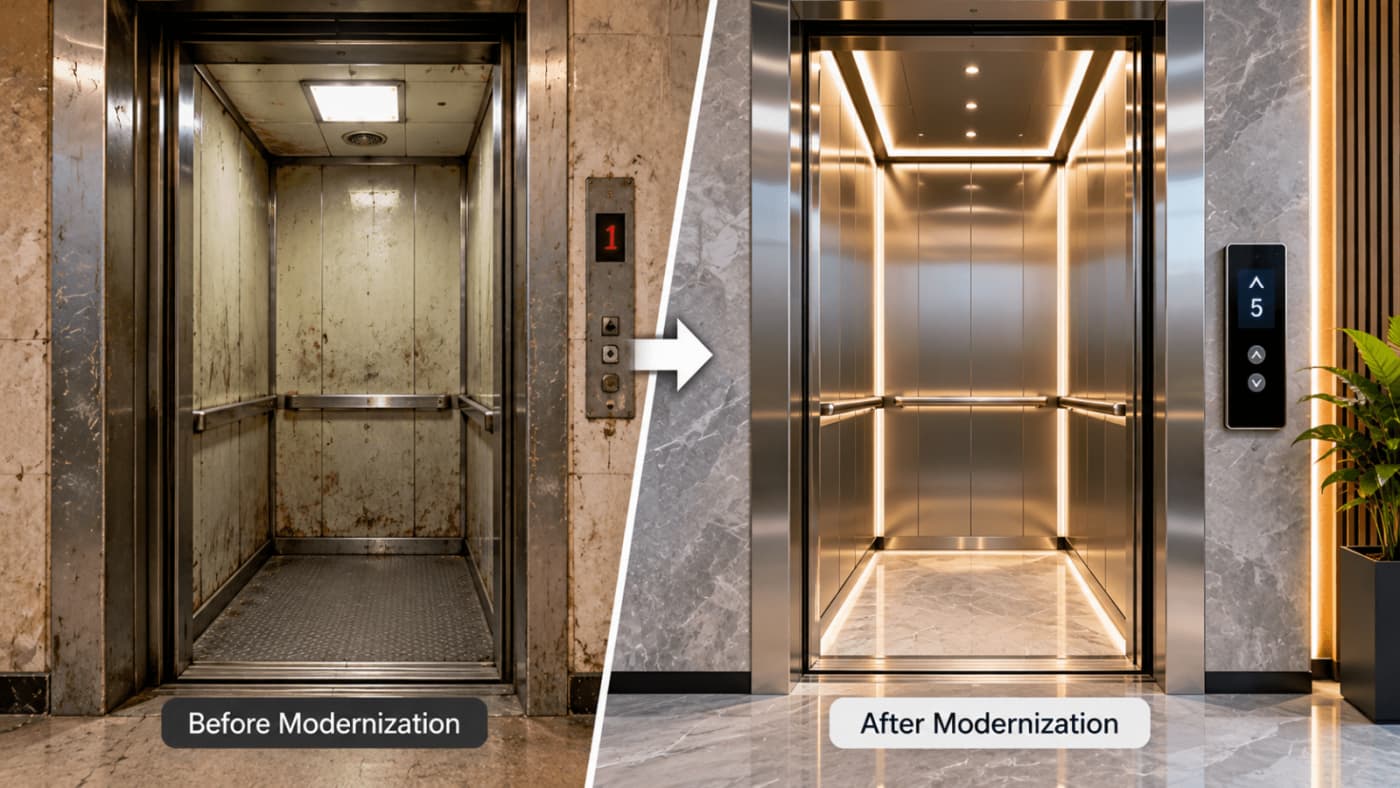
Elevator Modernization in India: When Should You Upgrade?
Elevators are an essential part of modern residential and commercial buildings. From apartment complexes and hotels to hospitals and corporate offices, lifts help people move comfortably between floors every day.
However, as elevators continue to operate over the years, their components experience wear and technological systems can become outdated. Frequent breakdowns, slow operation, unreliable doors and difficulties in finding replacement components may indicate that an existing elevator needs attention.
This is where elevator modernization in India becomes important.
Instead of immediately replacing an entire elevator system, building owners may be able to upgrade selected components to improve performance, reliability and passenger experience.
In this guide, we explain what elevator modernization involves, when an upgrade may be necessary, which components can be replaced and what building owners should consider before starting a modernization project.
1. What Is Elevator Modernization?
Elevator modernization is the process of upgrading selected components of an existing elevator to improve its performance, reliability, safety systems or overall functionality.
An elevator consists of multiple interconnected systems, including its motor, controller, drive, doors, operating panels, electrical wiring and protective devices.
Over time, certain components may become outdated or difficult to maintain.
Modernization allows building owners to evaluate these components and replace or upgrade those that require improvement.
Depending on the elevator's existing condition, modernization may involve:
- Elevator control panel upgrades.
- Motor and drive system upgrades.
- Automatic door operator replacement.
- Car Operating Panel (COP) upgrades.
- Landing Operating Panel (LOP) replacement.
- Electrical wiring and system improvements.
- Cabin interior renovation.
- Selected safety system upgrades.
Not every elevator needs complete modernization. A professional technical assessment helps determine which components should be retained, repaired or replaced.
2. When Should You Consider Elevator Modernization?
There is no single age at which every elevator must be modernized. The decision depends on equipment condition, usage, maintenance history, component availability and applicable requirements.
However, certain warning signs indicate that an elevator should be professionally evaluated.
A. Frequent Breakdowns
If an elevator frequently stops working or requires repeated repairs, there may be underlying issues with its electrical, mechanical or control systems.
Replacing or upgrading the affected components may help address recurring problems.
B. Outdated Control Systems
Older elevator controllers may have limited diagnostic capabilities or become difficult to maintain because compatible replacement components are no longer readily available.
Depending on the system, upgrading the controller may improve fault monitoring and operational control.
C. Slow or Uncomfortable Operation
Unusual vibrations, inconsistent levelling or uncomfortable starting and stopping may indicate issues that require investigation.
Drive system adjustments or selected component upgrades may improve the passenger experience.
D. Frequent Door Problems
Elevator door systems experience regular use.
Repeated door malfunctions, irregular movement and difficulties obtaining compatible replacement parts may indicate the need for door operator or related component upgrades.
E. Difficulty Finding Replacement Components
Some older elevator systems use components that are increasingly difficult to source.
A modernization assessment can identify suitable replacement options and help building owners plan future maintenance.
F. Outdated Cabin and Operating Panels
Old cabin interiors, damaged buttons, outdated indicators and worn operating panels can affect the overall appearance and usability of an elevator.
Modernization can also include interior improvements and updated passenger interfaces.
3. Which Elevator Components Can Be Modernized?
The modernization scope depends on the existing equipment and the building's requirements.
A. Elevator Control Panel
The control panel manages elevator operation, floor selection, movement commands and interactions with other elevator systems.
Upgrading an older control system may provide improved diagnostics, modern control features and better compatibility with selected equipment.
The proposed replacement must be compatible with the elevator's motors, sensors, safety circuits and other components.
B. Motor and Drive System
The motor and drive system are responsible for moving the elevator car.
Depending on the elevator design, selected drive components may be upgraded to improve operating characteristics and energy efficiency.
The suitability of a replacement must be evaluated against the existing mechanical arrangement.
C. Automatic Door Operator
The door operator controls the opening and closing of elevator doors.
Upgrading this system may help address recurring door-related problems and support smoother operation.
Door locks, sensors and associated safety circuits must also be evaluated.
D. Car Operating Panel (COP)
The Car Operating Panel is the interface passengers use inside the elevator.
A modernization project may replace older buttons and indicators with contemporary operating panels.
Available options can include touch-screen interfaces, improved floor indicators and updated passenger controls.
E. Landing Operating Panel (LOP)
Landing operating panels are installed at individual floors and allow passengers to call the elevator.
These can be upgraded with new buttons, indicators and suitable interface options.
F. Cabin Interior
Modernization may also involve improvements to the elevator cabin.
Possible upgrades include:
- Stainless steel wall finishes.
- New ceiling designs.
- Improved lighting.
- Updated handrails.
- New flooring.
- Modern operating panels.
Cabin upgrades should maintain appropriate dimensions, clearances and equipment compatibility.
4. Partial Modernization vs Complete Modernization
Not every elevator modernization project requires replacing the entire system.
The appropriate approach depends on the condition of the existing equipment.
Partial Elevator Modernization
Partial modernization involves upgrading selected components while retaining other suitable existing equipment.
Examples include:
- Replacing an outdated controller.
- Upgrading the drive system.
- Replacing the door operator.
- Installing new operating panels.
- Renovating the cabin interior.
This approach may be appropriate when the remaining elevator equipment is in acceptable condition and compatible with the proposed upgrades.
Complete Elevator Modernization
Complete modernization involves upgrading a larger portion of the existing elevator system.
Depending on the project, this may include major electrical, mechanical, control and safety-related components.
It is generally considered when multiple major systems are outdated, unreliable or difficult to maintain.
A detailed engineering assessment is necessary to determine whether partial or extensive modernization is the better option.
5. Elevator Modernization vs Complete Elevator Replacement
One of the biggest questions building owners face is whether to modernize their existing elevator or replace it entirely.
Both approaches have different considerations.
Choose Modernization When:
- The existing shaft and structural arrangement remain suitable.
- Major retained components are in acceptable condition.
- Selected electrical or mechanical components need upgrading.
- Compatible replacement equipment is available.
- A partial upgrade can address the identified problems.
Consider Complete Replacement When:
- Multiple major systems are deteriorated.
- The existing equipment has significant compatibility limitations.
- Suitable replacement components are difficult to source.
- The existing elevator design no longer meets project requirements.
- Extensive modernization is no longer a practical option.
Modernization may be a practical option when the existing elevator structure and retained equipment remain suitable.
Complete replacement may be more appropriate when the existing system has extensive technical, structural or compatibility limitations.
The decision should be based on the elevator's actual condition rather than price alone.
6. What Affects the Cost of Elevator Modernization in India?
The cost of elevator modernization varies significantly according to the equipment, project scope and building conditions.
Important cost factors include:
Existing Elevator Condition
The condition of the motor, controller, doors, suspension system and other components affects the modernization scope.
Components Being Replaced
Replacing a control panel is different from upgrading multiple major mechanical and electrical systems.
Elevator Type
Traction, hydraulic and other elevator configurations may require different modernization approaches.
Building Requirements
The number of floors, stops, equipment arrangement and accessibility requirements can affect project complexity.
Cabin and Design Upgrades
New cabin finishes, operating panels, lighting and other optional features can influence the overall budget.
Installation and Downtime
Labour, transportation, testing, commissioning and the time required to complete the project should also be considered.
Building owners should request an itemised modernization quotation that clearly specifies included components, retained equipment, exclusions, testing requirements and warranty conditions.
7. Safety Considerations During Elevator Modernization
Elevator modernization must be planned carefully because multiple interconnected systems may be affected during an upgrade.
Important considerations include:
- Assessment of existing safety circuits.
- Compatibility of replacement controllers and drives.
- Inspection of door interlocks.
- Evaluation of braking and protective systems.
- Appropriate electrical protection.
- Testing of emergency communication.
- Verification of applicable safety requirements.
- Inspection and testing before returning the elevator to service.
Modernization should not be treated as simply replacing old components with new ones.
The complete installation must be evaluated to ensure that upgraded and retained components work together correctly.
All work should be carried out by qualified elevator professionals, with applicable inspections and approvals completed before the equipment is returned to normal operation.
8. How to Choose the Right Elevator Modernization Company
Selecting an experienced elevator company is important for a successful modernization project.
Before finalising a service provider, consider the following:
- Technical assessment: The company should inspect the existing elevator before recommending replacements.
- Component compatibility: Proposed upgrades should be compatible with retained equipment.
- Transparent quotation: Every major replacement and exclusion should be clearly documented.
- Installation experience: Review the company's experience with similar modernization projects.
- Safety procedures: Understand how testing, inspection and commissioning will be handled.
- After-sales support: Check the availability of maintenance and technical assistance.
- Warranty: Review the warranty coverage for replacement components and installation work.
A reliable modernization partner should explain why each upgrade is necessary and what improvements can reasonably be expected.
9. Why Choose Rieka Elevators for Elevator Modernization?
At Rieka Elevators, we understand that an existing elevator does not always need to be replaced completely.
In many situations, upgrading selected components may provide a practical way to improve the elevator's functionality and passenger experience.
Our elevator services include:
- Elevator modernization and upgrades.
- Control panel replacement.
- Elevator drive system upgrades.
- Door operator improvements.
- Cabin and operating panel upgrades.
- Elevator repair and troubleshooting.
- Annual Maintenance Contracts.
- New elevator installation.
Our approach focuses on understanding the existing equipment, identifying technical concerns and recommending suitable modernization options.
Whether you manage a residential apartment building, commercial property or institutional facility, Rieka Elevators can help you explore the right upgrade approach for your elevator.
Frequently Asked Questions About Elevator Modernization
1. What is elevator modernization?
Elevator modernization involves upgrading selected components of an existing elevator to improve its functionality, reliability, safety provisions or passenger experience.
2. Can an old elevator be modernized?
In many cases, yes. However, feasibility depends on the condition of the existing equipment, compatibility of replacement components and building requirements.
3. Is elevator modernization cheaper than installing a new lift?
Modernization may cost less than complete replacement when suitable existing equipment can be retained. However, extensive modernization can involve significant investment. A project-specific quotation is necessary.
4. Can I replace only the elevator control panel?
In certain installations, the control panel can be replaced independently. However, its compatibility with the motor, drive, sensors, safety circuits and other equipment must be verified.
5. How long does elevator modernization take?
The project duration depends on the number of components being upgraded, equipment availability, installation complexity and testing requirements.
6. Does modernization improve elevator performance?
Depending on the existing condition and upgrade scope, modernization may improve operating characteristics, fault diagnosis, door performance and passenger comfort.
7. Should an elevator be modernized or completely replaced?
The decision depends on the technical condition of the existing equipment, the extent of required repairs, component availability and long-term project economics. A professional assessment can help identify the appropriate option.
Conclusion
An ageing elevator does not always require complete replacement. Depending on its condition, carefully planned modernization may improve functionality, upgrade important systems and support more dependable operation.
The key is to identify which components need attention and ensure that all proposed upgrades work together as an integrated elevator system.
For building owners, facility managers and property developers, timely evaluation can help make better long-term decisions about elevator maintenance and investment.
Is your elevator outdated or experiencing frequent breakdowns?
Contact Rieka Elevators to discuss your elevator modernization requirements and explore suitable upgrade solutions for your building.
Rieka Elevators – Always Here for You.